Best Rest Stops on Major Highway Routes in Bangladesh
April 13, 2026
|
rest stops
highway food
road trip
Comilla
Srimangal
travel tips
Bangladesh routes
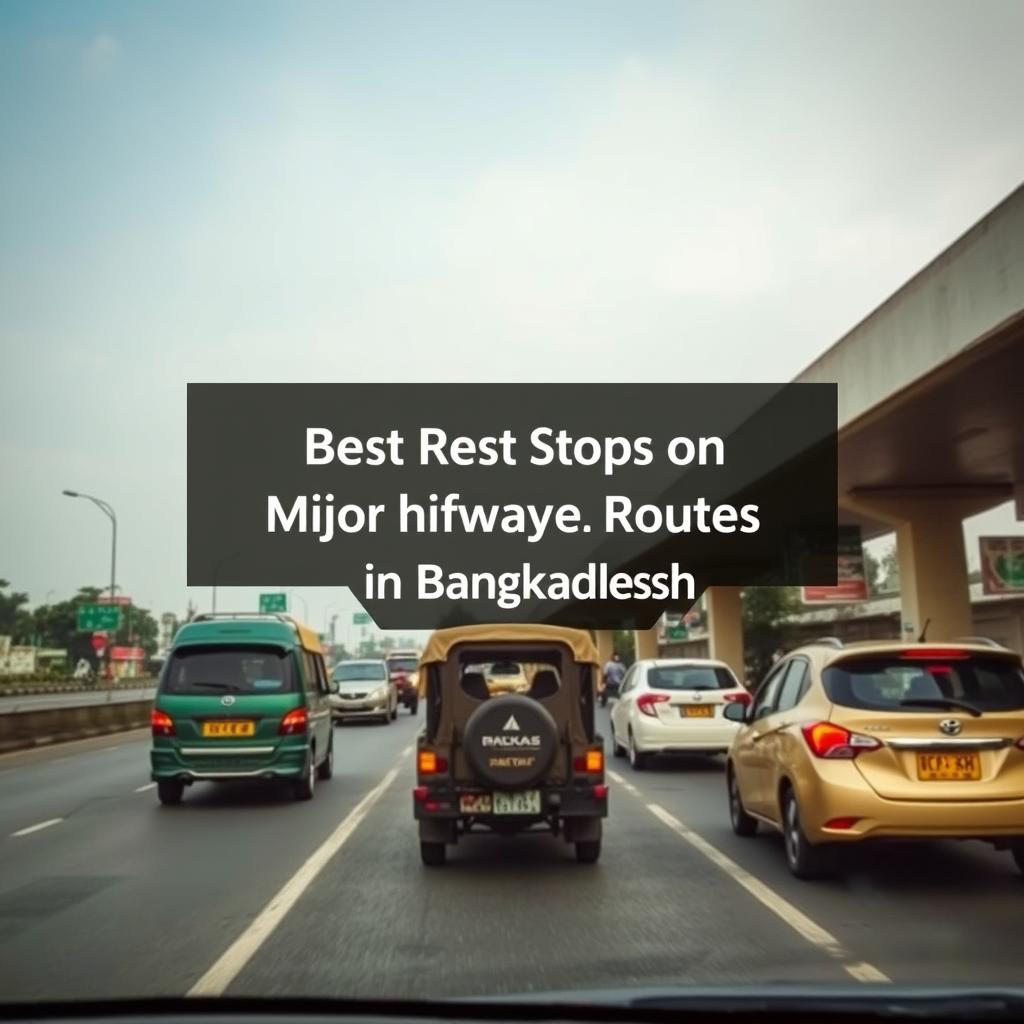
<h2>Why Rest Stops Matter More Than You Think</h2>
<p>On a 6-8 hour highway drive across Bangladesh, where you stop can make or break the trip experience. A good rest stop provides clean restrooms, decent food, safe parking, and enough of a break to recharge before the next driving stretch. A bad one wastes time, disappoints with poor food, and leaves you feeling worse than before you stopped. Yet most travelers rely on random stops or driver suggestions that may prioritize the driver's convenience over the passenger's experience.</p>
<p>This guide covers vetted rest stops on Bangladesh's four most-traveled intercity routes. These recommendations come from frequent travelers and experienced Khansland Ride drivers who know these routes intimately. We focus on three criteria: food quality, restroom cleanliness, and parking safety.</p>
<h2>Dhaka to Chittagong / Cox's Bazar (N1 Highway)</h2>
<p>This is Bangladesh's busiest intercity route, and the rest stop infrastructure reflects that. The best stops, from north to south:</p>
<p><strong>Comilla (approximately 2 hours from Dhaka):</strong> The natural first stop on any southbound journey. The Comilla bypass area has several well-established restaurants. Matribhumi Restaurant is a longtime favorite with reliably good food — their chicken roast and dal are consistently praised by travelers. Restrooms are maintained and reasonably clean by highway standards. The real Comilla draw is the legendary mishti doi (sweet yogurt) — buy a pot from one of the roadside vendors near the bypass. Comilla's mishti doi is genuinely different from what you get in Dhaka, and it makes excellent road trip fuel.</p>
<p><strong>Feni (approximately 3.5-4 hours from Dhaka):</strong> The midpoint for the full Dhaka-Cox's Bazar journey. Feni town has fewer traveler-oriented restaurants than Comilla, but the highway rest area near the Feni bypass offers basic but clean facilities. This is primarily a restroom-and-stretch stop rather than a meal stop. If you timed your departure well (starting from Dhaka at 6-7 AM), Feni is where you might want a light snack and tea before pushing on to Chittagong for lunch.</p>
<p><strong>Chittagong City (approximately 5 hours from Dhaka):</strong> If you're continuing to Cox's Bazar, Chittagong is where you should have a proper meal. The Agrabad commercial area has several good restaurants within 10 minutes of the highway exit. Handi Restaurant offers excellent Mughlai food, and Zareen's is popular for Chittagong-style dishes. Allow 45-60 minutes for a Chittagong lunch stop — the food quality justifies the time, and you'll need the energy for the remaining 3-hour stretch to Cox's Bazar.</p>
<p><strong>Chakaria (approximately 1.5 hours before Cox's Bazar):</strong> The last significant town before your destination. If you skipped Chittagong lunch, Chakaria has local restaurants serving fresh seafood at lower prices than Cox's Bazar. This is also your last reliable fuel station before the coast — top up here if your tank is below half.</p>
<h2>Dhaka to Sylhet (N2 Highway)</h2>
<p>The Dhaka-Sylhet highway offers fewer dedicated rest stops than the southern routes, but the scenery makes up for it.</p>
<p><strong>Narsingdi (approximately 1.5 hours from Dhaka):</strong> The first reasonable stop. The highway passes through Narsingdi town where several restaurants cluster near the bypass road. This is a good first-stop for tea and snacks if you departed early. The famed Narsingdi sweets (particularly rosogolla and sandesh) are worth trying — several sweet shops line the main road.</p>
<p><strong>Habiganj (approximately 3-3.5 hours from Dhaka):</strong> Habiganj is where the landscape starts transitioning from flatlands to rolling hills. The town has basic but functional rest facilities. Local restaurants serve good home-style Bengali food — ask for their fish preparations, which use fresh river fish from the nearby haor system. Habiganj is also where you might encounter slower traffic due to bazaar day congestion — plan accordingly.</p>
<p><strong>Srimangal (approximately 4 hours from Dhaka, slight detour):</strong> If you have time for a 30-minute detour, Srimangal is Bangladesh's premier tea country. The Nilkantha Tea Cabin serves what many consider the best seven-layer tea in the country — a must-try roadside experience. Several tea gardens offer quick walking tours (15-20 minutes) that give children a memorable break from the car. The detour adds about 30-40 minutes to your total travel time but is worth it, especially for first-time visitors to the region.</p>
<h2>Dhaka to Rajshahi / Rangpur (N5/N6 Highway)</h2>
<p>The northwestern routes cross the Padma via the Bangabandhu Bridge and traverse flat agricultural heartland.</p>
<p><strong>Tangail (approximately 2 hours from Dhaka):</strong> The first major town heading northwest. Tangail's famous delicacy is chom chom (a syrup-soaked sweet) — buy from established shops near the town center rather than roadside vendors for quality assurance. Several clean restaurants operate near the Tangail bypass with reliable food and adequate facilities.</p>
<p><strong>Sirajganj / Bangabandhu Bridge area (approximately 3 hours from Dhaka):</strong> The bridge crossing itself is an experience — at 4.8 km, it's one of the longest bridges in South Asia. Rest facilities near the bridge approach have improved significantly in recent years. Stop here for the view, restroom break, and tea. The stalls on the Sirajganj side serve surprisingly good jhalmuri (spicy puffed rice snack) that makes a great road trip companion for the next stretch.</p>
<p><strong>Bogra (approximately 5 hours from Dhaka):</strong> If heading to Rangpur, Bogra is your meal stop. Bogra's famous doi (yogurt) rivals Comilla's — thicker, creamier, and often served in clay pots. The town has several restaurants clustered near the bus terminal area that serve fresh, hot food throughout the day. Bogra is also the gateway to Mahasthangarh, one of Bangladesh's most important archaeological sites — if your schedule allows, the detour is culturally rewarding.</p>
<h2>Dhaka to the Southwest via Padma Bridge</h2>
<p>The Padma Bridge has transformed southwestern Bangladesh from a ferry-dependent backwater into a directly accessible region.</p>
<p><strong>Mawa / Padma Bridge approach (approximately 1.5 hours from Dhaka):</strong> The Mawa area has experienced a restaurant boom since the bridge opened. Several establishments near the bridge toll plaza offer hilsa fish (Mawa is famous for its Padma hilsa) and river views. This is an excellent first stop — the food is genuinely good, the setting is scenic, and you cross the bridge with a full stomach for the journey ahead.</p>
<p><strong>Madaripur (approximately 2.5 hours from Dhaka, post-bridge):</strong> The first significant town after crossing the Padma. Local restaurants serve excellent river fish — the Padma and its tributaries supply some of the freshest freshwater fish in Bangladesh. The town is also known for its date palm jaggery (khejur gur) in winter — if traveling November-February, buy some for the journey.</p>
<p><strong>Barisal (approximately 4 hours from Dhaka):</strong> If heading to Kuakata or exploring the Barisal division, stop here for a proper meal. Barisal's floating guava market (seasonal, July-September) is a unique attraction worth a brief visit. The town's restaurants serve outstanding hilsa preparations — this is the heart of Bangladesh's hilsa fishing industry, and the freshness shows.</p>
<h2>General Rest Stop Tips</h2>
<p>Carry your own hand sanitizer and tissues — even the best highway restrooms in Bangladesh may not have soap or paper. Tell your Khansland Ride driver your preferred rest stop schedule before departure — experienced drivers often have their own favorites, and combining your research with their local knowledge produces the best stops. If traveling with children, prioritize stops with outdoor space where kids can run and burn energy. And always top up your water supply at every stop — dehydration on long drives causes fatigue, headaches, and irritability that makes the entire trip less enjoyable.</p>
<p>On a 6-8 hour highway drive across Bangladesh, where you stop can make or break the trip experience. A good rest stop provides clean restrooms, decent food, safe parking, and enough of a break to recharge before the next driving stretch. A bad one wastes time, disappoints with poor food, and leaves you feeling worse than before you stopped. Yet most travelers rely on random stops or driver suggestions that may prioritize the driver's convenience over the passenger's experience.</p>
<p>This guide covers vetted rest stops on Bangladesh's four most-traveled intercity routes. These recommendations come from frequent travelers and experienced Khansland Ride drivers who know these routes intimately. We focus on three criteria: food quality, restroom cleanliness, and parking safety.</p>
<h2>Dhaka to Chittagong / Cox's Bazar (N1 Highway)</h2>
<p>This is Bangladesh's busiest intercity route, and the rest stop infrastructure reflects that. The best stops, from north to south:</p>
<p><strong>Comilla (approximately 2 hours from Dhaka):</strong> The natural first stop on any southbound journey. The Comilla bypass area has several well-established restaurants. Matribhumi Restaurant is a longtime favorite with reliably good food — their chicken roast and dal are consistently praised by travelers. Restrooms are maintained and reasonably clean by highway standards. The real Comilla draw is the legendary mishti doi (sweet yogurt) — buy a pot from one of the roadside vendors near the bypass. Comilla's mishti doi is genuinely different from what you get in Dhaka, and it makes excellent road trip fuel.</p>
<p><strong>Feni (approximately 3.5-4 hours from Dhaka):</strong> The midpoint for the full Dhaka-Cox's Bazar journey. Feni town has fewer traveler-oriented restaurants than Comilla, but the highway rest area near the Feni bypass offers basic but clean facilities. This is primarily a restroom-and-stretch stop rather than a meal stop. If you timed your departure well (starting from Dhaka at 6-7 AM), Feni is where you might want a light snack and tea before pushing on to Chittagong for lunch.</p>
<p><strong>Chittagong City (approximately 5 hours from Dhaka):</strong> If you're continuing to Cox's Bazar, Chittagong is where you should have a proper meal. The Agrabad commercial area has several good restaurants within 10 minutes of the highway exit. Handi Restaurant offers excellent Mughlai food, and Zareen's is popular for Chittagong-style dishes. Allow 45-60 minutes for a Chittagong lunch stop — the food quality justifies the time, and you'll need the energy for the remaining 3-hour stretch to Cox's Bazar.</p>
<p><strong>Chakaria (approximately 1.5 hours before Cox's Bazar):</strong> The last significant town before your destination. If you skipped Chittagong lunch, Chakaria has local restaurants serving fresh seafood at lower prices than Cox's Bazar. This is also your last reliable fuel station before the coast — top up here if your tank is below half.</p>
<h2>Dhaka to Sylhet (N2 Highway)</h2>
<p>The Dhaka-Sylhet highway offers fewer dedicated rest stops than the southern routes, but the scenery makes up for it.</p>
<p><strong>Narsingdi (approximately 1.5 hours from Dhaka):</strong> The first reasonable stop. The highway passes through Narsingdi town where several restaurants cluster near the bypass road. This is a good first-stop for tea and snacks if you departed early. The famed Narsingdi sweets (particularly rosogolla and sandesh) are worth trying — several sweet shops line the main road.</p>
<p><strong>Habiganj (approximately 3-3.5 hours from Dhaka):</strong> Habiganj is where the landscape starts transitioning from flatlands to rolling hills. The town has basic but functional rest facilities. Local restaurants serve good home-style Bengali food — ask for their fish preparations, which use fresh river fish from the nearby haor system. Habiganj is also where you might encounter slower traffic due to bazaar day congestion — plan accordingly.</p>
<p><strong>Srimangal (approximately 4 hours from Dhaka, slight detour):</strong> If you have time for a 30-minute detour, Srimangal is Bangladesh's premier tea country. The Nilkantha Tea Cabin serves what many consider the best seven-layer tea in the country — a must-try roadside experience. Several tea gardens offer quick walking tours (15-20 minutes) that give children a memorable break from the car. The detour adds about 30-40 minutes to your total travel time but is worth it, especially for first-time visitors to the region.</p>
<h2>Dhaka to Rajshahi / Rangpur (N5/N6 Highway)</h2>
<p>The northwestern routes cross the Padma via the Bangabandhu Bridge and traverse flat agricultural heartland.</p>
<p><strong>Tangail (approximately 2 hours from Dhaka):</strong> The first major town heading northwest. Tangail's famous delicacy is chom chom (a syrup-soaked sweet) — buy from established shops near the town center rather than roadside vendors for quality assurance. Several clean restaurants operate near the Tangail bypass with reliable food and adequate facilities.</p>
<p><strong>Sirajganj / Bangabandhu Bridge area (approximately 3 hours from Dhaka):</strong> The bridge crossing itself is an experience — at 4.8 km, it's one of the longest bridges in South Asia. Rest facilities near the bridge approach have improved significantly in recent years. Stop here for the view, restroom break, and tea. The stalls on the Sirajganj side serve surprisingly good jhalmuri (spicy puffed rice snack) that makes a great road trip companion for the next stretch.</p>
<p><strong>Bogra (approximately 5 hours from Dhaka):</strong> If heading to Rangpur, Bogra is your meal stop. Bogra's famous doi (yogurt) rivals Comilla's — thicker, creamier, and often served in clay pots. The town has several restaurants clustered near the bus terminal area that serve fresh, hot food throughout the day. Bogra is also the gateway to Mahasthangarh, one of Bangladesh's most important archaeological sites — if your schedule allows, the detour is culturally rewarding.</p>
<h2>Dhaka to the Southwest via Padma Bridge</h2>
<p>The Padma Bridge has transformed southwestern Bangladesh from a ferry-dependent backwater into a directly accessible region.</p>
<p><strong>Mawa / Padma Bridge approach (approximately 1.5 hours from Dhaka):</strong> The Mawa area has experienced a restaurant boom since the bridge opened. Several establishments near the bridge toll plaza offer hilsa fish (Mawa is famous for its Padma hilsa) and river views. This is an excellent first stop — the food is genuinely good, the setting is scenic, and you cross the bridge with a full stomach for the journey ahead.</p>
<p><strong>Madaripur (approximately 2.5 hours from Dhaka, post-bridge):</strong> The first significant town after crossing the Padma. Local restaurants serve excellent river fish — the Padma and its tributaries supply some of the freshest freshwater fish in Bangladesh. The town is also known for its date palm jaggery (khejur gur) in winter — if traveling November-February, buy some for the journey.</p>
<p><strong>Barisal (approximately 4 hours from Dhaka):</strong> If heading to Kuakata or exploring the Barisal division, stop here for a proper meal. Barisal's floating guava market (seasonal, July-September) is a unique attraction worth a brief visit. The town's restaurants serve outstanding hilsa preparations — this is the heart of Bangladesh's hilsa fishing industry, and the freshness shows.</p>
<h2>General Rest Stop Tips</h2>
<p>Carry your own hand sanitizer and tissues — even the best highway restrooms in Bangladesh may not have soap or paper. Tell your Khansland Ride driver your preferred rest stop schedule before departure — experienced drivers often have their own favorites, and combining your research with their local knowledge produces the best stops. If traveling with children, prioritize stops with outdoor space where kids can run and burn energy. And always top up your water supply at every stop — dehydration on long drives causes fatigue, headaches, and irritability that makes the entire trip less enjoyable.</p>
